
As summer fades into cooler autumn temperatures, your HVAC system is about to make an important transition. After working hard to keep your home cool throughout the summer, your heating system will soon become the star of the show.
Fall is the perfect time to make sure your HVAC system is clean, efficient, and ready for the colder months ahead. A little preventative maintenance now can help improve comfort, reduce energy waste, and potentially prevent an unexpected heating breakdown when you need your system most.
- Replace or Check Your Air Filter
One of the simplest HVAC maintenance tasks is also one of the most important.
A dirty air filter can restrict airflow, making your HVAC system work harder to heat and cool your home. Depending on your system, household conditions, and filter type, filters may need to be replaced or cleaned regularly.
Check your filter before the heating season begins. If it looks dirty or clogged, replace it with the correct size and type recommended for your system.
- Schedule a Professional HVAC Tune-Up
Before temperatures drop, consider having a qualified HVAC professional inspect and service your heating system.
A fall maintenance visit may include checking:
- The furnace or heating equipment
- Electrical connections
- Thermostat operation
- Burners and ignition components
- Blower components
- Safety controls
- Ductwork and airflow
- Heat exchanger and other critical components
Identifying potential problems early can help reduce the risk of a no-heat emergency during a cold spell.
- Test Your Thermostat
Your thermostat plays a major role in maintaining a comfortable home.
Before you need regular heat, switch your thermostat to heating mode and make sure the system responds properly. If you have a programmable or smart thermostat, review your schedule and adjust the settings for your autumn routine.
You may also want to replace the thermostat batteries if applicable.
- Check Your Vents and Registers
Walk through your home and make sure heating vents and registers aren’t blocked by furniture, rugs, curtains, boxes, or other objects.
Keeping vents clear allows warm air to circulate more effectively throughout your home.
Avoid closing large numbers of vents in an attempt to redirect heat. Your HVAC system is designed to operate with a particular airflow balance, and restricting airflow can create unnecessary strain.
- Inspect Your Outdoor HVAC Equipment
If your home has an outdoor heat pump or other outdoor HVAC equipment, inspect the area around it.
Remove leaves, branches, grass clippings, and other debris that may have accumulated around the unit. Keep vegetation trimmed back so air can circulate freely.
Never attempt to disassemble or repair electrical or refrigerant components yourself. Contact a qualified HVAC professional if you notice damage or unusual operation.
- Check Your Ductwork
Your heating system can only work efficiently if the warm air is reaching the rooms where you need it.
Look for accessible ductwork that may have loose connections, visible damage, or gaps. You may also notice rooms that consistently feel much colder or warmer than others, which could indicate an airflow or ductwork issue.
A professional HVAC technician can evaluate your system and identify potential sources of energy loss.
- Pay Attention to Unusual Sounds or Smells
When you turn on your heating system for the first time in months, pay attention to how it operates.
A brief dusty smell can sometimes occur when a furnace is first turned on after sitting unused. However, persistent burning odors, unusual noises, repeated cycling, or other concerning changes should not be ignored.
If something doesn’t seem right, turn the system off if appropriate and contact an HVAC professional for an inspection.
If you ever smell gas, leave the home and contact your gas utility or emergency services from a safe location.
- Check Your Carbon Monoxide Detectors
Fall is also a good time to test your carbon monoxide (CO) detectors.
Fuel-burning heating equipment can produce carbon monoxide if it malfunctions or is improperly vented. Make sure CO detectors are installed as recommended, test them regularly, and replace batteries or the entire detector according to the manufacturer’s instructions.
Never ignore a carbon monoxide alarm.
- Clean Around Your Furnace
Keep the area surrounding your furnace and other heating equipment clean and free of clutter.
Do not store boxes, paint, gasoline, cleaning products, or other combustible materials near heating equipment. Maintaining adequate clearance helps promote safe operation and allows technicians to access the equipment when maintenance is needed.
- Consider Your Energy Efficiency
Autumn is an excellent time to look for ways to reduce heating costs.
Simple improvements can include:
- Sealing drafts around doors and windows
- Adding or improving insulation
- Using weatherstripping around doors
- Checking attic insulation
- Using curtains or blinds strategically
- Installing a programmable or smart thermostat
- Having ductwork inspected for leaks
Small improvements throughout your home can contribute to better comfort and energy efficiency.
- Don’t Wait Until the First Cold Snap
One of the biggest mistakes homeowners make is waiting until the temperature suddenly drops to discover that their heating system isn’t working properly.
HVAC companies can become especially busy during the first major cold spell of the season. Taking care of maintenance in early autumn gives you more time to address potential problems before you depend on your heating system every day.
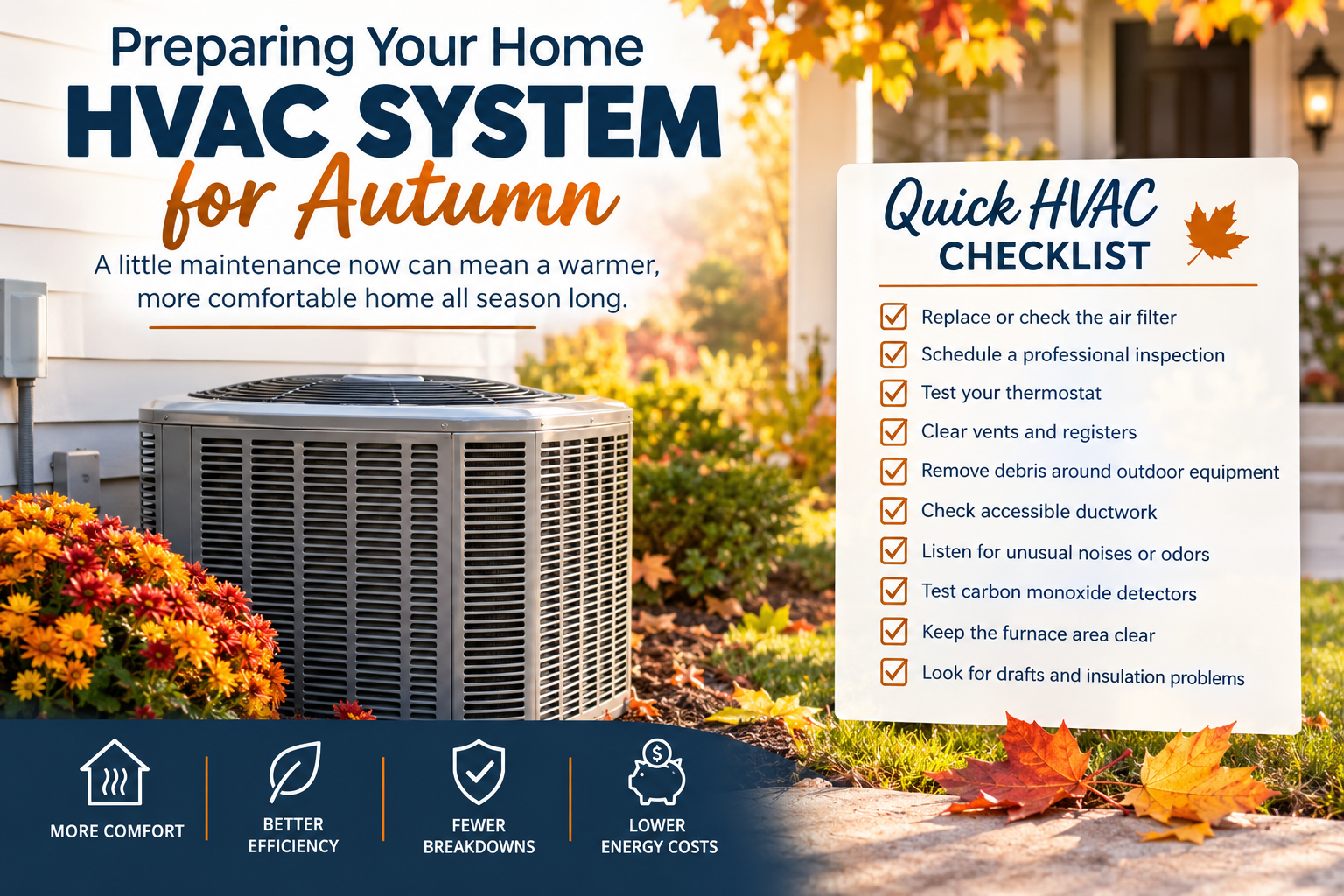
Your Autumn HVAC Checklist
Before the heating season gets underway, take a few minutes to make sure you’ve covered the basics:
☐ Replace or check the air filter
☐ Schedule a professional HVAC inspection
☐ Test the thermostat
☐ Clear vents and registers
☐ Remove debris around outdoor equipment
☐ Check accessible ductwork
☐ Listen for unusual noises
☐ Check for unusual odors
☐ Test carbon monoxide detectors
☐ Keep the furnace area clear
☐ Look for drafts and insulation problems
Stay Comfortable All Season Long
Preparing your HVAC system for autumn doesn’t have to be complicated. Regular maintenance, proper airflow, and early attention to potential problems can help keep your home comfortable as temperatures fall.
Most importantly, don’t ignore warning signs. If your heating system is making unusual noises, struggling to maintain temperature, cycling frequently, or showing other signs of trouble, having it inspected before winter arrives may help prevent a much bigger problem later.
A little preparation in the fall can go a long way toward a warmer, more comfortable home all winter long.


