Colorado winters don’t ease in quietly. One day you’re enjoying a crisp 65-degree afternoon along the Front Range, and the next, a cold front drops temperatures below freezing overnight.
When that freeze arrives, your heating system takes the full hit. The last thing you want on the coldest night of the year is to hear a strange banging noise, smell something burning, or discover your vents blowing lukewarm air.
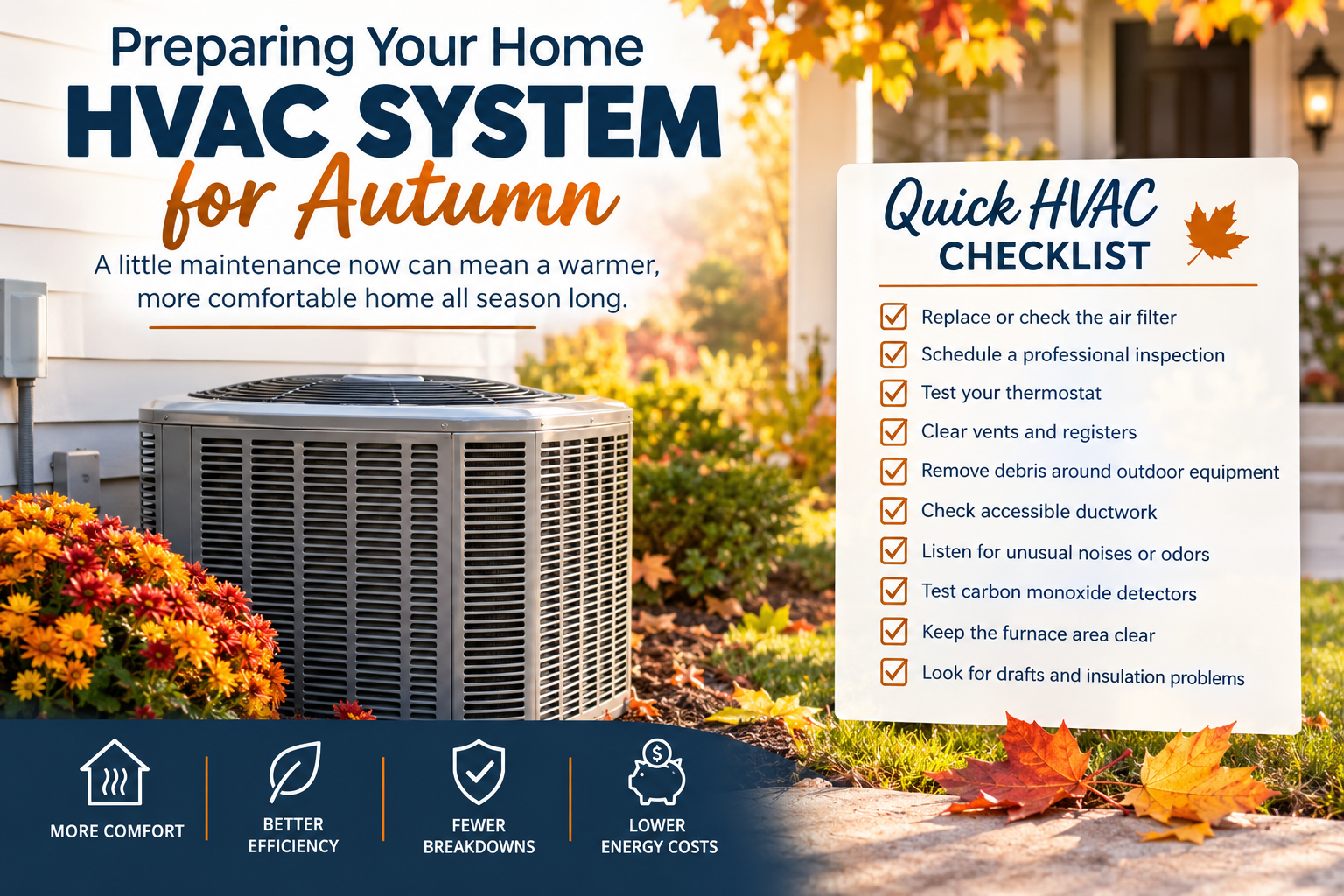
Getting your HVAC system winter-ready doesn’t just prevent emergency breakdowns—it protects your safety, lowers monthly utility bills, and extends the life of your equipment. Here is a practical checklist every homeowner can use before turning the thermostat to heat.
- Inspect and Replace Air Filters
Restricted airflow is the most common reason furnaces struggle or overheat in early winter. Over the summer and early fall, dust, pollen, and debris settle into your filters.
- The Fix: Swap out 1-inch to 2-inch standard fiberglass filters every 30 to 60 days during peak heating season. For thicker 4-inch to 5-inch media filters, inspect them before turning the furnace on and replace them at least every 6 to 9 months.
- Why it matters: A clean filter ensures steady airflow over the heat exchanger, keeping heating cycles efficient and preventing the system from tripping safety switches.
- Test the Thermostat and Switch to Heating Mode
Before the outdoor temperature plunges into the teens, do a test run:
- Switch your thermostat from COOL to HEAT.
- Set the target temperature about 3 to 5 degrees above the current room temperature.
- Listen for the furnace to kick on and wait 5 to 10 minutes to verify warm air is flowing from the registers.
If your system uses a battery-powered thermostat, replace the batteries now. A dead pair of AA batteries is often the culprit behind a furnace that suddenly stops responding. If you haven’t upgraded yet, consider installing a programmable or smart thermostat to automatically dial back temperatures during work hours or while you sleep.
- Clear Around Vents, Registers, and the Furnace
During summer, furniture, storage boxes, rugs, and curtains tend to migrate over supply registers and return grilles.
- Indoor Airflow: Walk through every room and make sure return and supply vents are fully unblocked and open. Closing vents in unused rooms actually raises static pressure inside ductwork and forces your blower motor to work harder.
- Furnace Clearance: Heating units—whether in a basement, utility closet, or garage—need room to breathe. Keep at least 3 feet of clearance around your furnace or boiler. Remove paint cans, solvents, cardboard boxes, and holiday decor stored nearby.
- Check Safety Alarms and Exterior Exhaust Vents
Gas furnaces, boilers, and water heaters produce combustion byproducts, including carbon monoxide (CO). Fall is the ideal time to test life-safety devices:
- Test smoke and CO detectors: Push the test buttons on every level of your home, especially outside sleeping areas. Replace batteries immediately if they chirp or haven’t been changed in a year.
- Inspect outdoor vents: High-efficiency furnaces and boilers vent exhaust through PVC pipes on the exterior of your home. Check that these pipes aren’t clogged with dried leaves, bird nests, or weeds, and keep an eye out for snow drifts blocking them once winter hits.
- Shut Down and Protect Your Outdoor AC Unit
While modern outdoor condensing units are built to withstand winter weather, a few preventative steps prevent freeze damage:
- Clear away accumulated leaves, twigs, and weed growth within a two-foot radius around the outdoor cabinet.
- Avoid wrapping the entire unit tightly with a non-breathable plastic tarp, which traps condensation and accelerates rust. Instead, place a fitted condenser cover or a sheet of plywood secured with a brick on top to block falling ice and icicles while allowing side airflow.
- Schedule a Professional Heating Tune-Up
While DIY checks handle everyday maintenance, critical safety and mechanical inspections require professional diagnostic tools. A certified technician will:
- Inspect the heat exchanger: Microscopic cracks in a heat exchanger can leak toxic carbon monoxide directly into living spaces.
- Clean and calibrate burners and flame sensors: Dirty sensors cause the furnace to short-cycle or fail to light.
- Check electrical connections and amp draws: Loose terminals and worn blower motor capacitors lead to sudden mid-winter motor failures.
- Verify gas pressure and combustion efficiency: Proper tuning ensures you aren’t burning excess fuel just to keep the house warm.
Stay Warm and Worry-Free with Tonville HVAC
At Tonville HVAC, our goal has always been simple: to repair your system, never sell you something you don’t need.
Serving Brighton, Colorado, and surrounding Front Range communities since 1987, our licensed, NATE-certified technicians specialize in keeping residential furnaces, boilers, heat pumps, and ductless mini-split systems running safely and efficiently all winter long.
We back our work with a 1-year workmanship warranty within 20 miles of Brighton and 10-year parts warranties, plus fast emergency service when severe weather strikes.
Don’t wait for the first blizzard to find out your furnace needs attention. Call Tonville HVAC at (303) 659-8583 or visit tonvillehvac.com to schedule your fall heating tune-up today!